
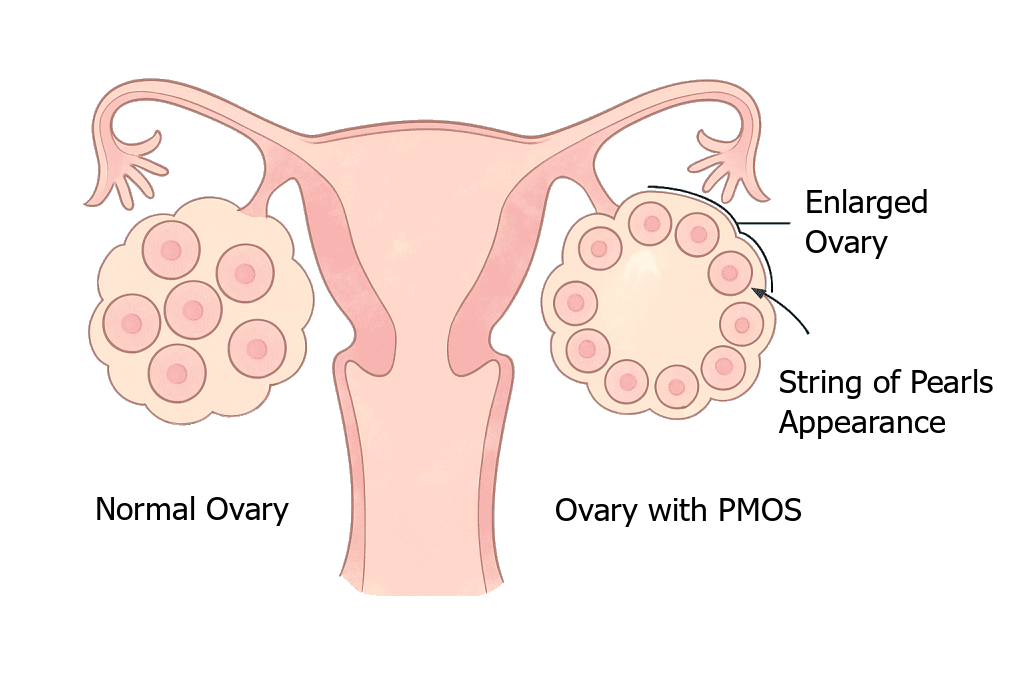
In May 2026, the international medical community reached a significant milestone: Polycystic Ovary Syndrome (PCOS) was officially renamed Polyendocrine Metabolic Ovarian Syndrome (PMOS). More than a change in terminology, the new name reflects a fundamental shift in how the condition is understood – from a disorder viewed primarily through a reproductive lens to a complex endocrine and metabolic disease with lifelong implications for cardiovascular, metabolic and reproductive health [1].
Yet, changing the name alone will not change patient outcome. One of the greatest barriers to timely diagnosis remains in primary care, where fragmented, under-coded and incomplete electronic medical records often obscure the early signs of disease. As a result, although PMOS affects an estimated 8-13% of women of reproductive age, many remain undiagnosed or experience years of diagnostic delay before receiving appropriate care.
This is where artificial intelligence can make a difference. This blog explains how Metadvice AI, by combining well-established clinical guideline knowledge with machine learning, uncovers subtle patterns hidden within routine medical records (EMRs) to identify patients at risk long before a formal diagnosis is made, improving clinical management. We explore how AI can help close the diagnostic gap, support evidence-based clinical decision-making, and improve adherence to established treatment guidelines, ultimately enabling earlier interventions and better outcomes for women living with PMOS.
The Hidden Reality of Sparse Primary Care Records
General Practitioners (GPs) are on the front lines of diagnosing PMOS, yet the clinical records they rely on are often surprisingly incomplete. In a large UK study analyzing records from 200,000 patients [Metadvice, in preparation], 44% of those diagnosed with a PMOS/PCOS had no accompanying clinical or metabolic features recorded in their medical records. More than 73% had no documented hormonal or biochemical testing (such as SHBG, Testosterone, or LH) before receiving their formal diagnosis date. Even after diagnosis, recommended follow-up care frequently fell short of clinical guidelines: only 27% had their blood pressure checked within the first year, just 13% underwent HbA1c screening, and only 5% received a full lipid profile. These gaps in documentation and monitoring leave millions of women navigating primary care with unrecorded symptoms, delayed diagnoses, missed metabolic risk factors, and incomplete treatment plans.
How AI Bridges Coding Gaps for a new Era of PMOS Management
To bridge these massive documentation and management gaps, Metadvice developed a sophisticated dual-engine AI approach utilizing both predictive Prognosis Models and Guideline Medicine.
1. Spotting PMOS from the context
Rather than waiting for symptoms to reach a tipping point, Metadvice enables proactive case finding through a specialized prognostic model that estimates the likelihood of a receiving a formal PMOS diagnosis within the next three years.
By utilizing transfer learning, the model starts with clinical knowledge and then is fine-tuned on real-world primary care electronic medical records. This approach allows it to uncover subtle patterns in routine clinical data that often precede a formal diagnosis but are easily missed in day-to-day practice. Fine-tuning on real-world clinical data improved predictive performance substantially, increasing the model’s area under the receiver operating curve (AUC-ROC) from 0.524 (near random performance using guidelines alone) to a significant 0.737 (after training on data). Configured as a high sensitivity screening tool, the model correctly identifies 93.6% of patients who will go on to receive a PMOS diagnosis. By flagging at-risk patients years before diagnosis, it gives GPs the opportunity to order confirmatory hormonal testing, investigate symptoms earlier, and begin appropriate management before complications develop.
2. Enforcing Guideline Adherence
Metadvice built a neural network trained to emulate the official NICE clinical guidelines, enabling consistent, evidence-based decision support at the point of care. In cases where sufficient clinical data were available, the model agreed with the clinician diagnosis 86% of the time.
- Therapy Gap Analysis: Across 9,497 treatment decision points (uncovered retrospectively about routine clinical management), only 22% of real-world care aligned guideline-recommended management.
- The Metadvice Impact: By systematically identifying these opportunities, the guideline engine has the potential to increase adherence to guidelines recommendation by as much as 78%, helping clinicians deliver more consistent, evidence-based care.
3. Decoding the AI with explanations
Clinical AI should support clinicians – not ask them to trust an unexplained algorithm. That is why Metadvice uses SHAP (SHapley Additive exPlanations) to show exactly which patient characteristics contribute to each prediction. The model’s explanations consistently highlighted well-established biological markers of PMOS risk, including elevated Dehydroepiandrosterone Sulfate (DHEAS), an increased Free Androgen Index (FAI) and reduced or altered Sex Hormone-Binding Globulin (SHBG). Importantly, these feature rankings closely mirrored the known pathophysiology of the condition, providing confidence that the model is learning clinically meaningful patterns rather than spurious correlations.
Beyond established biomarkers, the model also identified subtle, long-term signals that often precede a formal diagnosis, including persistent depressive disorders and early use of hormonal contraceptive that may have masked symptoms for years before comprehensive diagnostic evaluation. Together, these insights enable clinicians to understand not only who is at risk, but why the model reached this conclusion.
The Future of Preventative Care
The proposed evolution from Polycystic Ovary Syndrome (PCOS) to Polyendocrine Metabolic Ovarian Syndrome (PMOS) reflects a broader understanding of the condition, not simply as a reproductive disorder, but as a complex metabolic and endocrine disease. It underscores that monitoring insulin resistance [check the gluco-dynamics app], blood pressure, lipid profile and other cardiometabolic risk factors is just as important as assessing menstrual and reproductive health.
Solutions like Metadvice AI demonstrate that many of the clinical signals needed to identify patients earlier already exist within routing electronic medical records. By applying intelligent screening algorithms to these data, clinicians can identify patients at elevated risks years before a formal diagnosis is made. This enables general practitioners to move beyond reactive diagnosis towards proactive, evidence-based intervention, reducing diagnostic delays, improving adherence to clinical guidelines, and helping patients receive timely care before long-term complications emerge